
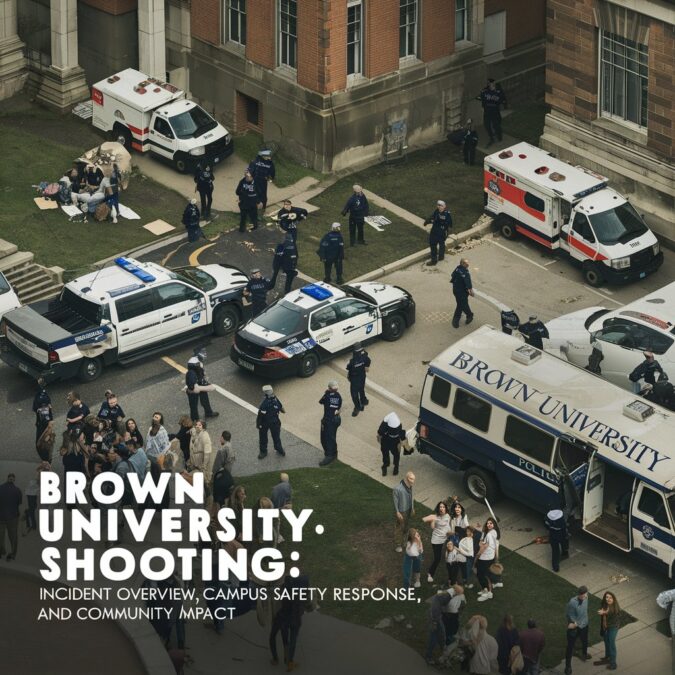

The topic often referred to as the “Brown University shooting” relates to reports and discussions surrounding a firearm-related safety incident associated with the campus environment of Brown University. In modern academic settings, such incidents are treated with extreme seriousness, not only because of the immediate threat they pose but also due to their long-term psychological and institutional impact. Universities like Brown University, located in Providence, Rhode Island, are known for their strong academic environments, but like many institutions in the United States, they are not entirely immune to broader societal issues such as gun violence. This article explores the incident context, emergency response systems, campus safety protocols, and broader implications for students, staff, and higher education institutions.
Brown University Shooting Incident Overview and Public Awareness
When discussions arise around a “Brown University Shooting,” they typically involve either confirmed incidents, reports of gun-related threats, or heightened security alerts that may or may not result in actual harm. In many cases across U.S. campuses, initial reports can emerge through emergency alerts or local law enforcement communications, which are later clarified as investigations proceed. At institutions like Brown University, even unconfirmed threats are treated with urgency to ensure student safety. The focus in such situations is immediate containment, verification of information, and communication with students and faculty. Public awareness of these events often spreads quickly through social media, which can sometimes amplify confusion before official statements are released.
Emergency Response Protocols at Brown University
In any situation involving potential violence, Brown University activates its emergency response system designed to protect students, faculty, and staff. These protocols typically include campus-wide alerts, coordination with Providence law enforcement, lockdown procedures, and controlled evacuation if necessary. Universities in the United States are required to maintain detailed crisis management plans, and Brown University is no exception. These systems are built to ensure rapid communication and minimize risk during uncertain or dangerous situations. The response also involves mental health support services, recognizing that even non-injurious incidents can have a strong psychological impact on the campus community.
Law Enforcement and Campus Security Coordination
During any reported shooting or threat situation at Brown University, coordination between campus security and local police plays a critical role. Law enforcement agencies are responsible for securing the perimeter, investigating the source of the threat, and ensuring that no ongoing danger exists. At the same time, campus safety officers help manage internal movement and provide real-time updates to university administrators. This cooperation is essential for preventing escalation and restoring normal campus operations as quickly as possible. In many cases, a joint investigation follows to determine whether the incident involved a real firearm discharge, a threat report, or misinformation.
Student and Faculty Safety Concerns
Events labeled as “Brown University shooting” raise significant concerns among students, parents, and faculty members. Even when incidents are resolved without physical harm, they can create lasting anxiety and disrupt the sense of safety that academic environments are expected to provide. Students may experience stress, fear, or difficulty concentrating on academic responsibilities following such events. Faculty members often work closely with university counseling services to support affected students. The psychological impact of perceived threats is increasingly recognized as an important aspect of campus safety management.
Media Coverage and Public Reaction
Media coverage of incidents involving Brown University often spreads rapidly, especially when keywords like “shooting” are involved. However, early reports may not always be fully accurate, and updates frequently change as investigations continue. Public reaction is typically shaped by concerns about gun violence in educational environments and broader debates about safety policies in the United States. Social media platforms can amplify both verified information and speculation, making it important for institutions and law enforcement agencies to provide clear, timely, and accurate updates.
Campus Safety Improvements and Preventive Measures
Following any reported shooting incident or threat, universities like Brown University often reassess their safety protocols. This may include upgrading surveillance systems, improving emergency communication tools, increasing security personnel presence, and conducting regular safety drills. Preventive education programs are also common, helping students and staff understand how to respond in emergency situations. These measures are designed not only to react to incidents but to reduce the likelihood and impact of future threats.
Psychological and Community Recovery After Incidents
One of the most important aspects following a Brown University shooting-related incident is community recovery. Even when no physical harm occurs, the emotional and psychological effects can linger. Counseling centers, peer support groups, and faculty-led discussions often play a key role in helping the campus return to normalcy. Universities also focus on rebuilding a sense of trust and security, ensuring that students feel supported both academically and emotionally.
Conclusion: Lessons from the Brown University Shooting Discussion
The discussion surrounding the Brown University shooting highlights the broader issue of campus safety in modern higher education. While institutions like Brown University have strong emergency systems in place, such incidents remind us of the importance of preparedness, communication, and community resilience. Whether an incident is confirmed or initially reported as a threat, the response framework emphasizes safety, coordination, and transparency. Ultimately, the goal is not only to respond effectively to emergencies but also to create an environment where students can pursue education with confidence and peace of mind.
Frequently Asked Questions (FAQs)
1. What is meant by the Brown University shooting?
It generally refers to reported or discussed firearm-related incidents or threats associated with the campus of Brown University, though details may vary depending on the specific event being referenced.
2. Was there an actual confirmed shooting at Brown University?
Not all reports labeled as such involve confirmed shootings. Some may involve threats or alerts that are later clarified by authorities.
3. How does Brown University respond to emergency situations?
Brown University uses emergency alerts, works with law enforcement, and activates campus safety protocols such as lockdowns and evacuations when necessary.
4. Are students safe during such incidents?
Universities prioritize student safety through rapid response systems, security coordination, and communication updates to reduce risk during emergencies.
5. What support is available after such events?
Counseling services, mental health support, and academic assistance are typically provided to help students and staff recover emotionally and academically.